
General
Starting to trade on DeFi can feel intimidating. Liquidity shifts quickly, tokens are volatile, and risks like front-running or slippage can eat into your gains. The good news is that with DEXTools, you do not need a big budget to begin. By using its real-time charts, DEXTools Trading Bot, and trade history, you can create a strategy that helps you grow steadily while staying safe.
Let’s see how to start with a small amount and use DEXTools’ features step by step to build a trading strategy and make the most out of every trade.
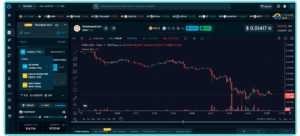
Step 1: Reading the Market with Real-Time Charts
Charts are where your strategy begins. With DEXTools, you have TradingView-powered charts that include candlesticks, multiple timeframes, and a wide selection of indicators. Even with a small balance, chart reading gives you the structure to avoid random entries.
- Short-term moves: On 1–5 minute charts, watch for exponential moving average (EMA) crossovers, combined with spikes in volume, to catch quick price surges.
- Swing setups: On 4-hour or daily charts, focus on 50 EMA (Exponential Moving Average) and 200 EMA. When price pulls back to the 50 EMA in an uptrend and RSI is showing strength above 40, it may be a good entry point.
- Sideways ranges: Use Bollinger Bands to identify when the market is temporarily stuck in a channel. Buy near the lower band, sell near the upper band, and repeat while the range lasts.
The idea is simple: small amounts need precise timing. A good chart setup keeps you from wasting capital on weak or random moves.
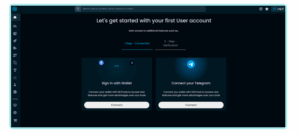
Step 2: Making Every Entry Count with the DEXTools Trading Bot
When your balance is limited, every percentage matters: fees, spreads, and slippage all hit harder. That’s where the DEXTools Trading Bot makes a difference:
- Execute trades directly from your account with built-in automation features like take-profit and stop-loss, so you don’t need to stay glued to the screen.
- Trade from Telegram by linking your DEXTools account. You can place trades, adjust orders, or get instant notifications right from the chat.
- Thanks to DEXTools’ integrated wallet (especially on Solana), some transactions can be signed automatically, giving you a true one-click trading experience.
- Instead of manually comparing pools as with MultiSwap, the bot helps you optimize execution, manage slippage, and reduce gas inefficiency.
Pro tip: if a token’s liquidity looks thin, break your order into smaller chunks. This lowers price impact and reduces the risk of failed or costly trades.
 Start with this First Steps Guide to easily connect multiple wallets to your DEXTools account, customize it your way, and trade with confidence using our Bot to maximize your Solana trading:
https://info.dextools.io/the-new-way-to-trade-with-dextools-first-steps-guide/
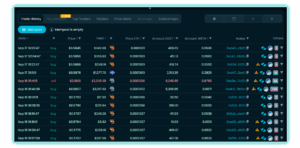
Step 3: Confirming the Move with Trade History
Charts show potential setups, but trade history shows what traders are actually doing right now. In DEXTools you can watch:
- Recent buys and sells: to see if there is genuine demand.
- Big swaps: which often signal whale interest.
- Pending transactions in the mempool: to anticipate sudden moves.
With a small balance, you cannot afford to enter against strong selling pressure. Before pressing “swap,” quickly check the feed: if wallets are dumping heavily, wait until momentum calms down.
Step 4: Protecting Yourself from MEV and Sandwich Attacks
Small trades are not immune to bots. Sandwich attacks happen when a bot detects your transaction and manipulates price around it. To reduce the risk:
- Keep your slippage tolerance low (for example, 0.5% instead of 2–3%).
- If you want to enter with a slightly bigger order, split it into smaller ones.
- Consider using transaction relays that hide your order from the public mempool if you ever scale up.
This step may seem advanced, but it makes a big difference in protecting your capital.
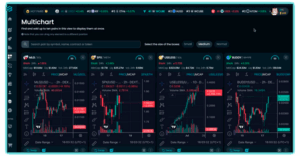
Step 5: Building a Routine Strategy
With small amounts, consistency is more important than chasing big wins. A simple workflow could look like this:
- Scan the charts for clear signals on your chosen timeframe.
- Check liquidity in the pair and open MultiSwap to compare prices.
- Decide your entry size: always small enough to avoid heavy slippage.
- Look at trade history and mempool to confirm healthy market flow.
- Place the trade with tight slippage settings, then monitor results.
Repeat this routine. Over time, the goal is to turn small wins into steady progress.
Common Mistakes to Avoid
- Entering trades without checking liquidity first, which can cause big slippage.
- Ignoring gas costs, which eat up a bigger percentage of small trades.
- Following hype in trending pairs without looking at trade history, which can lead to getting caught in pump-and-dump cycles.
And that ‘s it!
Trading with a small balance on DEXTools is not about chasing the fastest gains. It is about discipline, precision, and learning how to use the platform’s tools. By combining charts for setups, DEXTools Bot for best execution, and trade history for confirmation, you create a simple but powerful strategy that makes the most of every move.
For more tips, real-time insights, and discussions with other traders, join the official DEXTools Telegram Community here:
Telegram: View @DEXToolsCommunity
Disclaimer: This article is purely informational and does not constitute financial advice. We do not endorse or recommend purchasing any asset or participating in any project. Always do your own research (DYOR) and exercise caution before making any investment decisions.